
NDMA hosts 2nd Pak-China symposium on disaster early warning
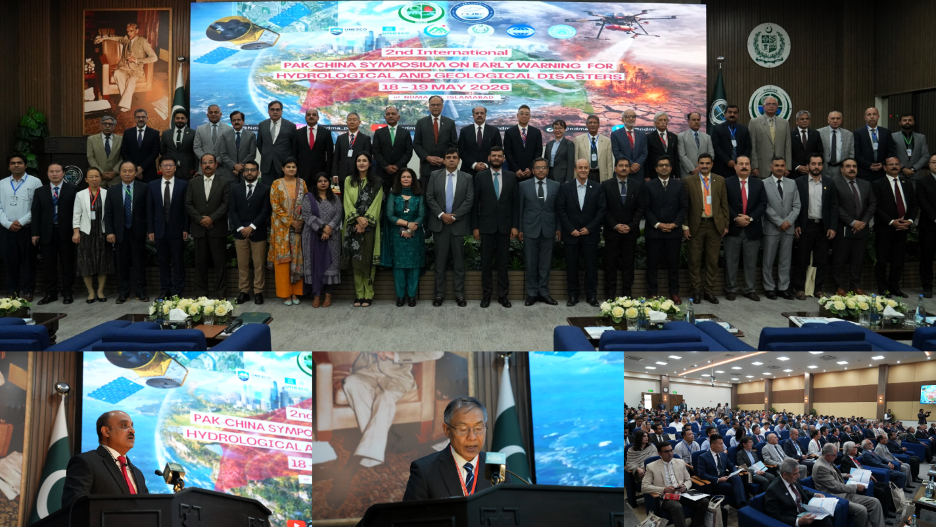
Few glimpses of the 2nd Pak-China Symposium. [Photos provided to Gwadar Pro]
ISLAMABAD, May 19 (Gwadar Pro) Pakistan’s National Disaster Management Authority hosted the 2nd Pak-China Symposium on Early Warning for Hydrological and Geological Disasters at its headquarters in Islamabad on May 18-19, bringing together officials, scientists and disaster management experts to discuss climate resilience and multi-hazard early warning systems.
The two-day symposium focused on regional cooperation in disaster risk reduction, with sessions covering glacier lake outburst floods, cryosphere monitoring, flood forecasting, landslide hazards, seismic risks, geospatial analytics, artificial intelligence and community preparedness.
During the inaugural session, NDMA said it launched “Global Best Practices for Disaster Mitigation and Management”, a compilation aimed at drawing on international standards, lessons and scalable models to strengthen Pakistan’s disaster management capacity.
Federal Minister for Planning, Development and Special Initiatives Prof. Ahsan Iqbal said climate change had become one of the defining challenges of the 21st century and required stronger preparedness, scientific innovation and institutional coordination to protect vulnerable communities and critical infrastructure.
He called for strengthening provincial capacities and operational coordination with NDMA to improve preparedness, early warning dissemination, emergency response and recovery operations.
Ahsan Iqbal said Pakistan faced risks from glacier lake outburst floods, flash floods, landslides, earthquakes, heatwaves and extreme weather events, and stressed the need to integrate disaster resilience into national development planning through science-based policymaking, technological modernisation and regional cooperation.
NDMA Chairman Lt Gen Inam Haider Malik said the authority was working to move from reactive disaster response to a more proactive and preparedness-driven disaster management system.
He said Pakistan and China’s shared exposure to hazards in the Hindu Kush, Karakoram and Himalayan region, including tectonic fault systems, glacier-fed rivers and infrastructure along the Karakoram region, made operational cooperation important.
He said strengthening multi-hazard early warning systems, improving risk communication and promoting community-centred preparedness remained national priorities.
Representatives of the Chinese Embassy reaffirmed support for deepening China-Pakistan cooperation in disaster management, scientific research, technological innovation and sustainable development, according to the organisers.
Experts from Chinese and Pakistani academic and scientific institutions presented research and operational experience on glacier dynamics, cryosphere monitoring, flood forecasting, landslide hazards, seismic risks, geospatial analytics, artificial intelligence and digital disaster resilience.